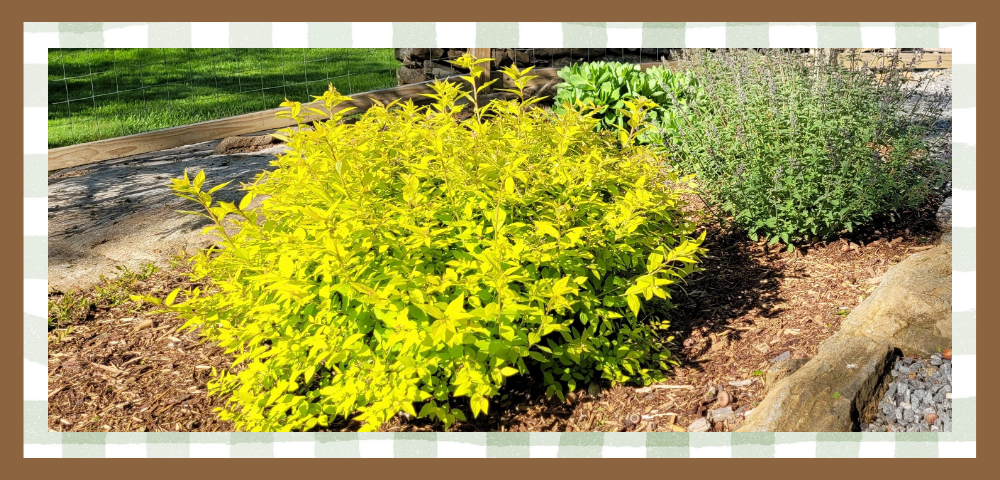
It’s been a typical slo-o-o-w warm up to spring here on the midcoast of Maine. We’re just starting to push into the low 60s during the day (though upper 50s are still pretty common), and the nights are chilly.
On the bright side, it does give us more time for garden cleanup, which we’ve been trying to get done before the black flies begin to swarm – the most unwelcome aspect of May each year. And the swarming started last night – ack!
The amount of leaves that still need to be removed from our gardens is impressive. Even after all the fall cleanup, there are lots of oak leaves to go. We’ve been chipping away at it between rain days, so we’re close, but there will always be some in places we don’t want them.
This post may contain affiliate links. For details, please see our Privacy Policy.

The rain days also make leaf removal a little challenging. We like to mulch the leaves and return them to the garden beds. Oak leaves make great mulch, they enrich the soil as they break down, and they’re free. That’s a gardening three-for-one! It’s just hard to do when they’re matted and dripping with rain water, but we make it work.

We mulch the dry top layer, loosen the wet leaves underneath, let them dry out, and then mulch those. It’s definitely a process, but worth the effort.
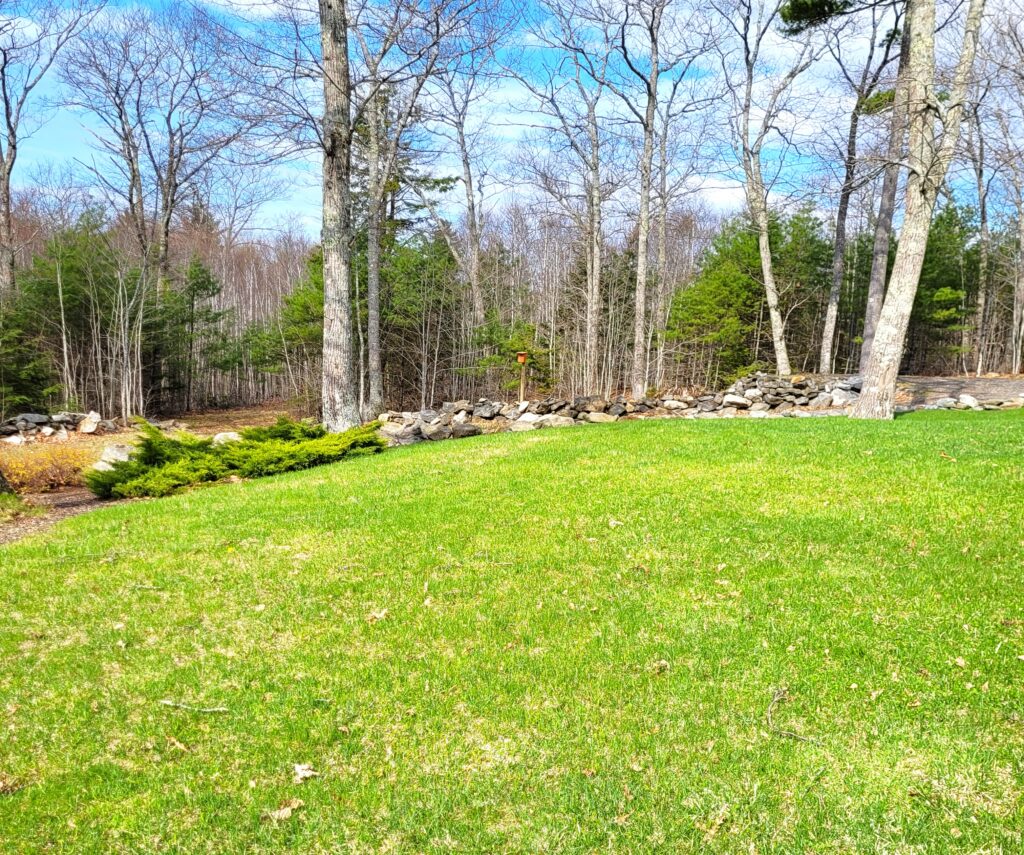
Right now, our grass has greened up and our perennials are showing welcome signs of life. Just seeing little spikes of green growth and buds lifts the mood.


The always-reliable Autumn Joy sedum and Walker’s Low catmint have lots of new growth.

The spirea planted around the property are just beginning to leaf out, too. We have Goldmound, Gold Flame, Magic Carpet, and Little Princess in several garden beds. They take a bit of extra management, as they reseed very easily and can lean toward invasive if you’re not diligent about removing the flower heads before they go to seed. If you forget to do that – like I did – come spring, you’ll need to pull up all the little seedlings that start from the dropped seeds.
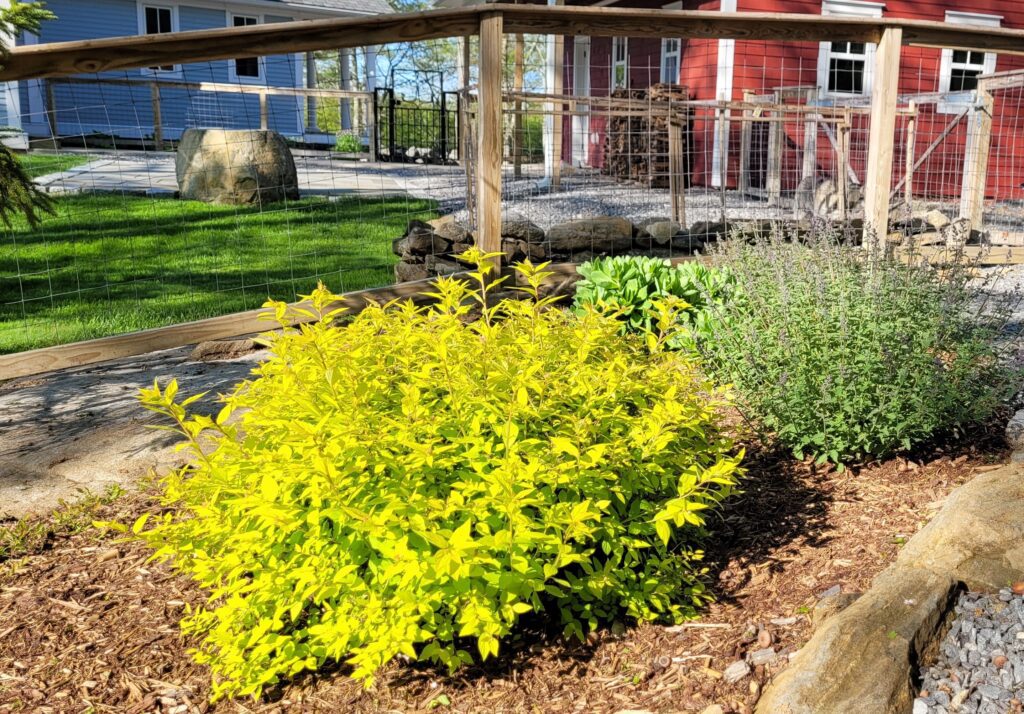
Otherwise, they’re pretty tough, drought tolerant, and they’re lovely, especially the Goldmound variety. It’s probably my favorite with its chartreuse f0liage and dainty pink flowers.
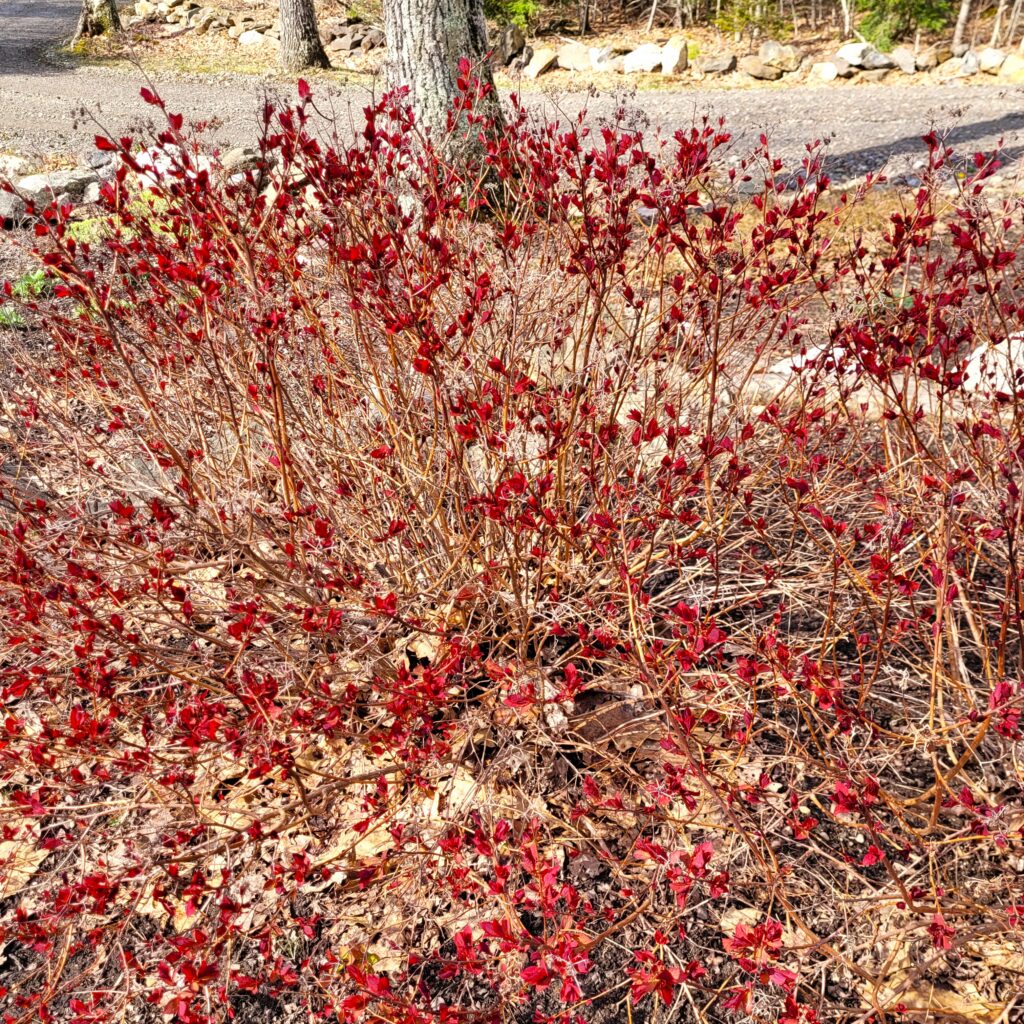

We also have some Double Play Doozie planted, which don’t produce seeds, so they’re a bit easier to manage. They produce a darker pink flower against dark green foliage. The foliage starts out as a red bud that turns lime green early in the season – so pretty.
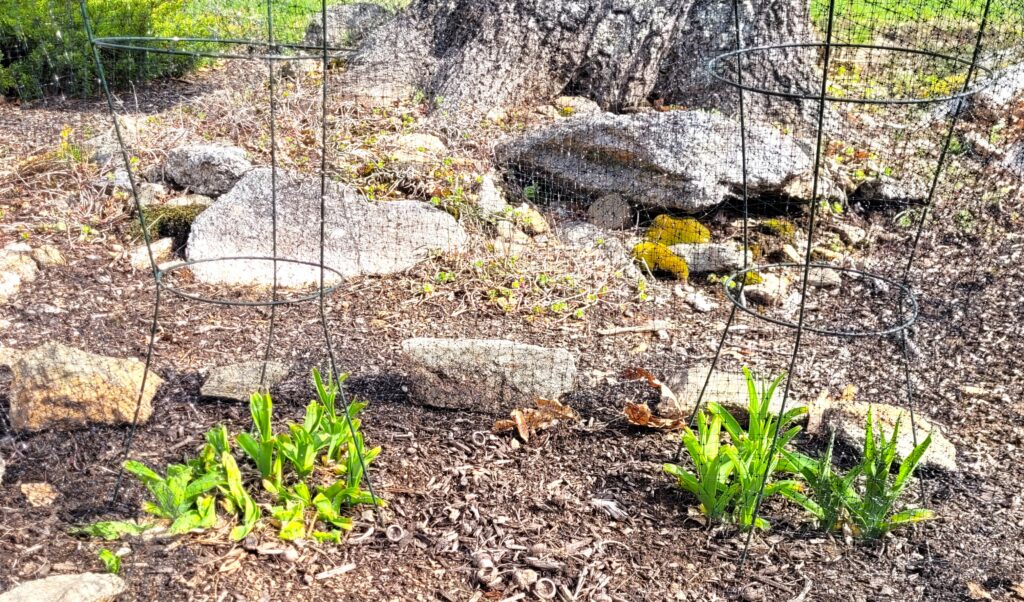
Sadly, the deer scalped our daylily foliage as it began to emerge – chewed down to nubs. The good news is that it is coming back. To minimize further deer damage, I added some makeshift wire fencing around the plantings. It looks awful, but it’s effective and temporary.

Shoots from our peonies are breaking through the ground, too, and I just saw our first Hosta buds starting to do the same. It’s always so exciting to see them waking up from their winter nap.
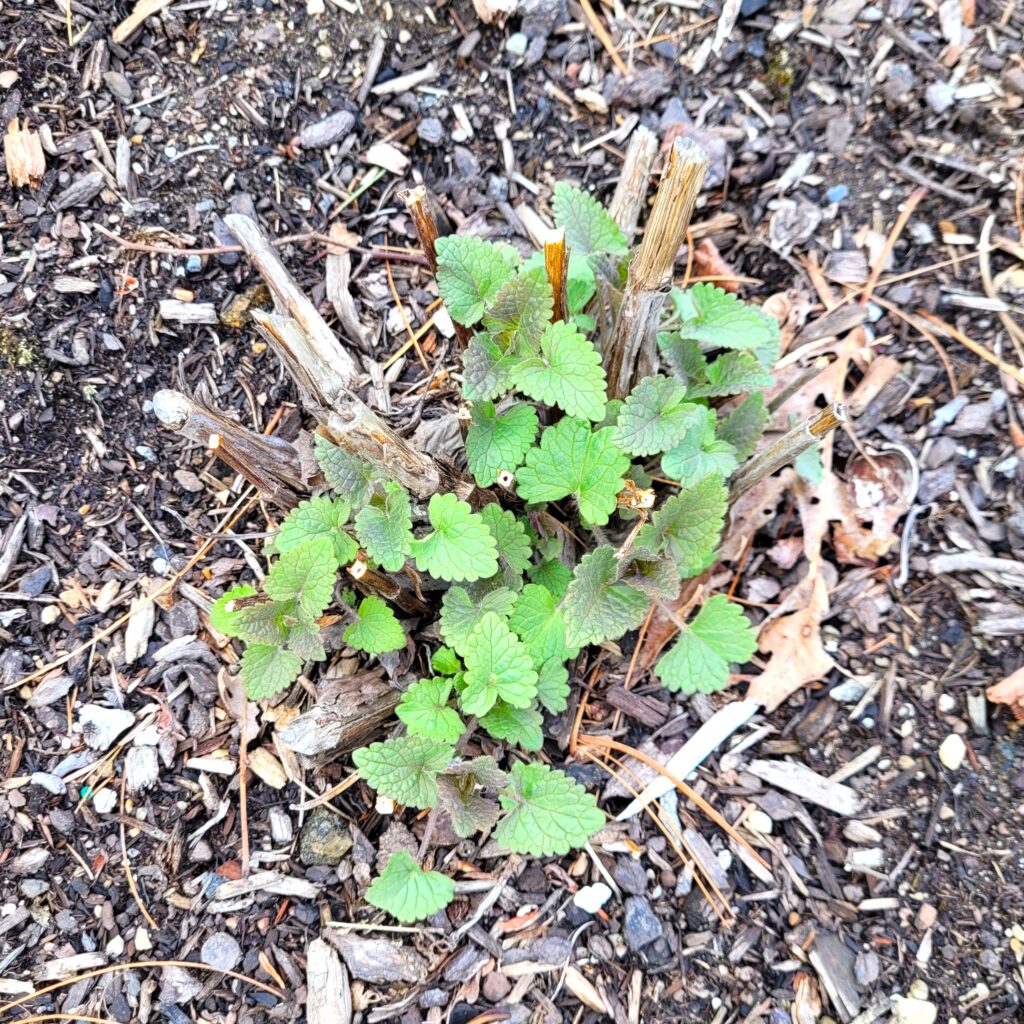
New growth is also beginning on our Anise Hyssop plants. The bees go crazy for this wonderful perennial and the deer tend to leave it alone.

They also avoid anything from the onion family, like our giant alliums. We planted some Globemasters, and my fingers are crossed that we’ll get nice big blossoms this year.

The same goes for our strawberry vanilla hydrangea and our rhododendrons. The rhodies haven’t done great, so I’m hoping that turns around this season. Last year’s drought certainly did not help.

Finally, our creeping phlox is producing lots of flower buds. This wonderful plant creates a mat-like ground cover and is loaded with little flowers in spring. It makes a great addition to rock gardens. This one is white, but we have pink and candy striped varieties, as well.
There’s much more happening, but we’ll save some for later!
If you’re in Maine and want some guidance with your garden, we recommend visiting the University of Maine Cooperative Extension, the Maine Organic Farmers and Gardeners Association (MOFGA), and The Wild Seed Project. These organizations are wonderful resources for gardening in Maine.